


Associated with the page Environment
Ragweed is a perennial, invasive plant that affects thousands of Brossard residents every summer. During the month of July, the plant is covered with small green flowers that release millions of pollen grains capable of traveling up to 1 km.
How can you identify it?
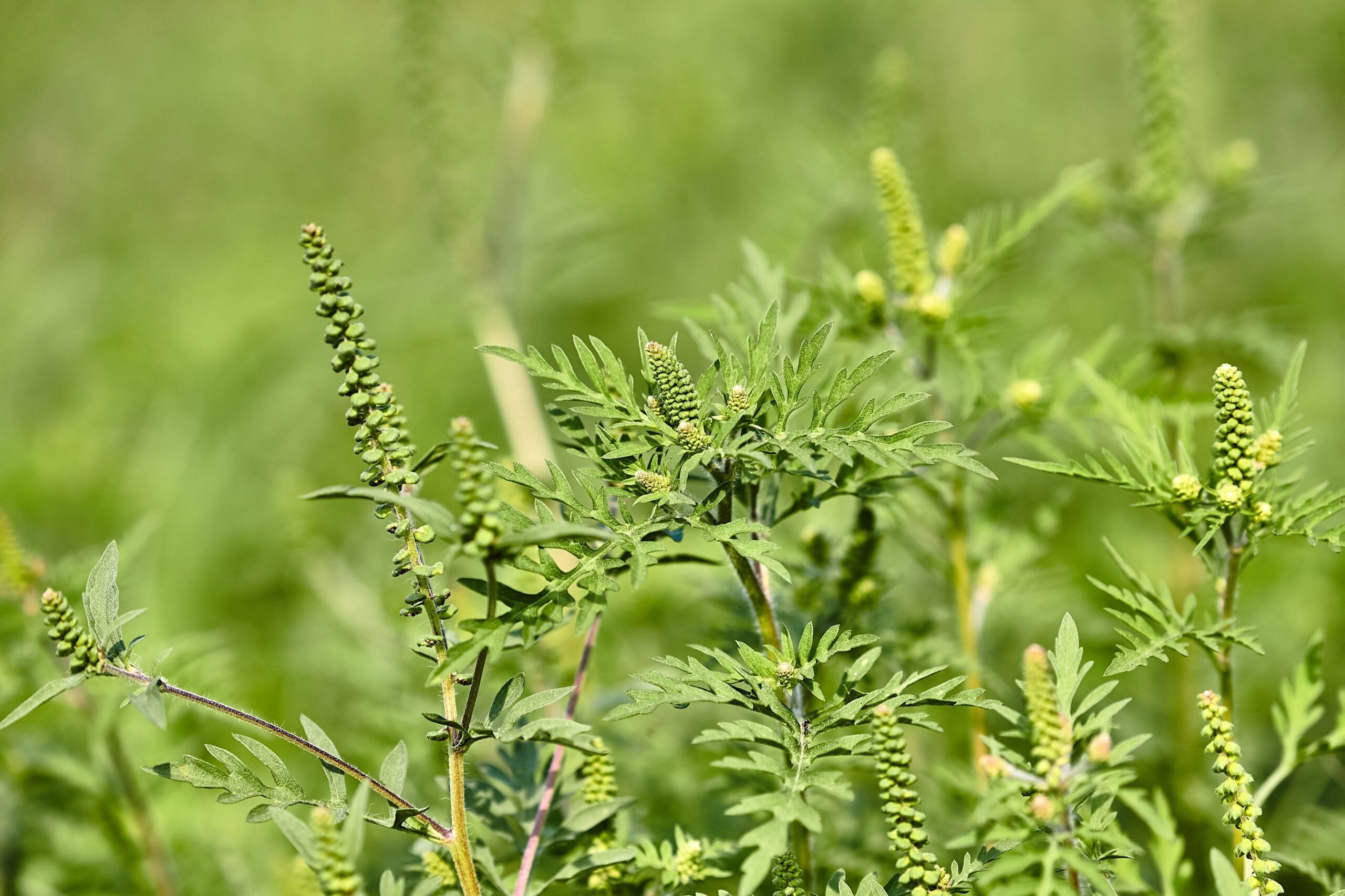
Ragweed grows mainly in low-fertility soils.
It is found mainly:
- along the streets and sidewalks;
- along paved roads;
- on vacant lots.
u003culu003ern tu003cliu003ePull up the plants before the pollination period, which is in mid-July and mid-August. This method is effective because the roots are located on the surface of the soil. Refer to the visuals below to recognize the plant according to its growth cycle.u003c/liu003ern tu003cliu003eIf you can’t pull it out, trim the plant as soon as you see it start to grow.u003c/liu003ern tu003cliu003eCover the ground with mulch or plant a competitive ground cover such as clover or grass.u003c/liu003ernu003c/ulu003e

Did you know?
- 75% of pollen allergies are caused by ragweed
- In Québec, 1 in 8 people is allergic to ragweed
- A plant can produce up to 3,000 seeds, and they can survive in the soil for 40 years